• Home
  • Practice Focus
    • Facial Plastic/Reconstructive
    • Head and Neck
    • Laryngology
    • Otology/Neurotology
    • Pediatric
    • Rhinology
    • Sleep Medicine
    • How I Do It
    • TRIO Best Practices
  • Business of Medicine
    • Health Policy
    • Legal Matters
    • Practice Management
    • Technology
    • AI
  • Literature Reviews
    • Facial Plastic/Reconstructive
    • Head and Neck
    • Laryngology
    • Otology/Neurotology
    • Pediatric
    • Rhinology
    • Sleep Medicine
  • Career
    • Medical Education
    • Professional Development
    • Resident Focus
  • ENT Perspectives
    • ENT Expressions
    • Everyday Ethics
    • From TRIO
    • The Great Debate
    • Letter From the Editor
    • Rx: Wellness
    • The Voice
    • Viewpoint
    • SUO Corner
  • TRIO Resources
    • Triological Society
    • The Laryngoscope
    • Laryngoscope Investigative Otolaryngology
    • TRIO Combined Sections Meetings
    • COSM
    • Related Otolaryngology Events
  • Home
  • Practice Focus
    • Facial Plastic/Reconstructive
    • Head and Neck
    • Laryngology
    • Otology/Neurotology
    • Pediatric
    • Rhinology
    • Sleep Medicine
    • How I Do It
    • TRIO Best Practices
  • Business of Medicine
    • Health Policy
    • Legal Matters
    • Practice Management
    • Technology
    • AI
  • Literature Reviews
    • Facial Plastic/Reconstructive
    • Head and Neck
    • Laryngology
    • Otology/Neurotology
    • Pediatric
    • Rhinology
    • Sleep Medicine
  • Career
    • Medical Education
    • Professional Development
    • Resident Focus
  • ENT Perspectives
    • ENT Expressions
    • Everyday Ethics
    • From TRIO
    • The Great Debate
    • Letter From the Editor
    • Rx: Wellness
    • The Voice
    • Viewpoint
    • SUO Corner
  • TRIO Resources
    • Triological Society
    • The Laryngoscope
    • Laryngoscope Investigative Otolaryngology
    • TRIO Combined Sections Meetings
    • COSM
    • Related Otolaryngology Events
  • Search
  • Facial Plastic/Reconstructive
  • Head and Neck
  • Laryngology
  • Otology/Neurotology
  • Pediatric
  • Rhinology
  • Sleep Medicine
  • How I Do It
  • TRIO Best Practices

Practice Focus » Otology/Neurotology

Dehiscence Size in SSCD Correlates with Air-Bone Gap Size

March 1, 2010

Does the size of the dehiscence in SSCD correlate with the size of the air-bone gap? Background: Patients with superior semicircular canal dehiscence (SSCD) present with a variety of symptoms […]

A Longer Shelf Life for Antimicrobial Ear Drops

March 1, 2010

What can physicians tell patients about the shelf life of antimicrobial ear drops and when bottles might become contaminated after use in the infected ear canal? Background: Little evidence exists […]

KTP and CO2 Laser Fiber Stapedotomy Compared

March 1, 2010

What is the safety and efficacy of the OmniGuide handheld fiber for CO2 laser stapedotomy as compared to the handheld potassium titanyl phosphate (KTP) laser in patients undergoing stapedotomy for […]

Cincinnati Criteria Identifies More Cases of Enlarged Vestibular Aqueduct

March 1, 2010

Are otolaryngologists underdiagnosing EVA? Background: Enlarged vestibular aqueduct (EVA) is the most commonly identified CT scan anomaly found in children with sensorineural hearing loss (SNHL). Current radiographic criteria for EVA […]

Language Performance in Disabled Children with Cochlear Implants

February 1, 2010

What are the effects of cochlear implants (CIs) on language among children with disabilities? Background: Early implantation of a CI in children with typical development is strongly associated with improved […]
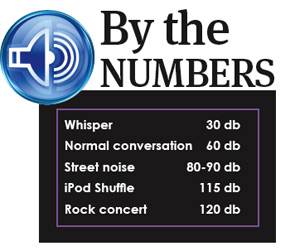
MP3 Generation: Noise-induced hearing loss rising among children and adolescents

January 1, 2010

Prior to the introduction of MP3 players, hearing loss among children was estimated at around 12.5 percent. More recent studies, however, estimate that 16 percent of teenagers, or approximately 6 million children, suffer from permanent noise-induced hearing loss (NIHL).

Pages: 1 2 3 4 | Single Page

Hearing Aid Update

December 1, 2009

Hearing aids-external electronic devices used to help individuals with hearing loss-traditionally consist of a microphone, an analog-to-digital converter, a digital signal processor, a digital-to-analog converter, and a receiver that delivers an acoustic signal into the external auditory canal. In 2008, 97% of all hearing aids sold used digital processing. Catherine V. Palmer, PhD, provides a review of current digital hearing aids.

Pages: 1 2 | Single Page

Managed Correctly, Hearing Aid Dispensing Augments the Bottom Line

December 1, 2009

SAN DIEGO-Hearing aids can become a reliable source of ancillary income for otolaryngologists, according to four speakers in the miniseminar, Hearing Aids: The Dollars and Cents of Dispensing, presented at the annual meeting of the American Academy of Otolaryngology-Head and Neck Surgery (AAO-HNS).

Pages: 1 2 3 | Single Page

Hearing Screening in Newborns and Young Children-Is Enough Being Done?

September 1, 2009

Approximately 28 million people living in the United States suffer from some degree of hearing loss. It is the most frequently occurring birth defect—about three of every 1,000 babies are born with hearing loss.
Pages: 1 2 3 4 | Single Page

Low-Frequency Hearing Loss May Indicate Cardiovascular Disease

September 1, 2009

PHOENIX-Low-frequency hearing loss could be an early indicator that a patient has cerebrovascular disease or is at risk for cardiovascular (CV) disease. These are the key findings in a two-part study investigating whether there is a relationship between audiometric patterns and vascular disease.

Pages: 1 2 3 | Single Page
  • « Previous Page
  • 1
  • …
  • 23
  • 24
  • 25
  • 26
  • 27
  • …
  • 30
  • Next Page »

The Triological SocietyENTtoday is a publication of The Triological Society.

Polls

More and more medical trainees are taking dedicated, prolonged gap years. Did you?

View Results

Loading ... Loading ...
  • Polls Archive

Top Articles for Residents

  • Is the SLOR in Otolaryngology Residency Applications Contributing to Rural Disparities?
  • Applications Open for Resident Members of the ENTtoday Editorial Board
  • A Resident’s View of AI in Otolaryngology
  • Call for Resident Bowl Questions
  • Resident Pearls: Pediatric Otolaryngologists Share Tips for Safer, Smarter Tonsillectomies
  • Popular this Week
  • Most Popular
  • Most Recent
    • Office Laryngoscopy Is Not Aerosol Generating When Evaluated by Optical Particle Sizer
    • Some Laryngopharyngeal Reflux Resists PPI Treatment
    • Cochlear Implants Improve Performance and Net Savings in Infants
    • Empty Nose Syndrome: Physiological, Psychological, or Perhaps a Little of Both?
    • Rating Laryngopharyngeal Reflux Severity: How Do Two Common Instruments Compare?
    • The Dramatic Rise in Tongue Tie and Lip Tie Treatment
    • Rating Laryngopharyngeal Reflux Severity: How Do Two Common Instruments Compare?
    • Is Middle Ear Pressure Affected by Continuous Positive Airway Pressure Use?
    • Otolaryngologists Are Still Debating the Effectiveness of Tongue Tie Treatment
    • Keeping Watch for Skin Cancers on the Head and Neck
    • Short-Term Efficacy of Biologics in Recalcitrant AFRS: A Systematic Review and Meta-Analysis
    • The Devaluation of Otolaryngology: An Evaluation of CMS’s Involvement in Physician Reimbursement
    • Embolized Middle Meningeal Artery as a Surgical Landmark in Infratemporal Fossa
    • Lord of the (Magnetic) Rings: Rigid Bronchoscopy for Aspirated Magnetic Foreign Bodies in Tertiary Bronchi
    • What Otolaryngologists Can Learn from Athletes

Follow Us

  • Contact Us
  • About Us
  • Advertise
  • The Triological Society
  • The Laryngoscope
  • Laryngoscope Investigative Otolaryngology
  • Privacy Policy
  • Terms of Use
  • Cookies

Wiley

Copyright © 2026 by John Wiley & Sons, Inc. All rights reserved, including rights for text and data mining and training of artificial technologies or similar technologies. ISSN 1559-4939