It’s critical that otolaryngologists become familiar with, educated about, and unafraid of AI to prepare for the inevitable integration of AI applications into their practices.

It’s critical that otolaryngologists become familiar with, educated about, and unafraid of AI to prepare for the inevitable integration of AI applications into their practices.
Commercial-grade, app-based pure tone audiometry demonstrates an overall strong correlation and accuracy with traditional audiometry, but it is not intended to replace an evaluation performed in a controlled environment with calibrated equipment and a skillfully trained clinician.

Value-Based Compensation model can be considered advantageous because it evens the playing field between proceduralists and non-proceduralists, but defining value and implementing VBC can be challenging.
In examples of academic submissions with “fake” references, journal staff and reviewers must be able to detect inappropriate use of artificial intelligence (AI) tools such as ChatGPT.

Virtual (VR), augmented (AR), and mixed realities (MR) all fall under the umbrella of extended reality (XR) and are characterized by extending a user’s experience into different worlds via technology that simulates those realms. In healthcare, currently, one of the main uses of XR occurs during surgery.

As with any powerful new technology, excitement over the real and potential benefits of LLMs within healthcare will need to be continually evaluated against real and potential risks. With the launch of ChatGPT for general usage, the time has arrived to weigh in on this balancing act as more people adopt the technology.

This article provides a brief foundational understanding of generative AI and describes examples of its current and potential uses in healthcare, as well as the experience of some otolaryngologists in their early adoption of generative AI programs designed to help ease the burdensome task of documentation.

While the economics of running an otolaryngology practice seem to get more challenging each year, financiers see plenty of opportunity for profit.

This article is the first in a series of five that looks at the broad dimensions of AI within the context of healthcare in general and otolaryngology where apt. This first article describes basic principles of AI and how these technologies are currently used in healthcare.
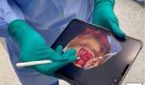
The Procreate application was utilized on iPad Pro to intraoperatively annotate 3D renderings of head and neck surgical defects and resection specimens. By using Procreate on an iPad, the surgeon could annotate intraoperatively without breaking scrub to indicate the breadth of supplemental margins harvested in real time.