• Home
  • Practice Focus
    • Facial Plastic/Reconstructive
    • Head and Neck
    • Laryngology
    • Otology/Neurotology
    • Pediatric
    • Rhinology
    • Sleep Medicine
    • How I Do It
    • TRIO Best Practices
  • Business of Medicine
    • Health Policy
    • Legal Matters
    • Practice Management
    • Technology
    • AI
  • Literature Reviews
    • Facial Plastic/Reconstructive
    • Head and Neck
    • Laryngology
    • Otology/Neurotology
    • Pediatric
    • Rhinology
    • Sleep Medicine
  • Career
    • Medical Education
    • Professional Development
    • Resident Focus
  • ENT Perspectives
    • ENT Expressions
    • Everyday Ethics
    • From TRIO
    • The Great Debate
    • Letter From the Editor
    • Rx: Wellness
    • The Voice
    • Viewpoint
    • SUO Corner
  • TRIO Resources
    • Triological Society
    • The Laryngoscope
    • Laryngoscope Investigative Otolaryngology
    • TRIO Combined Sections Meetings
    • COSM
    • Related Otolaryngology Events

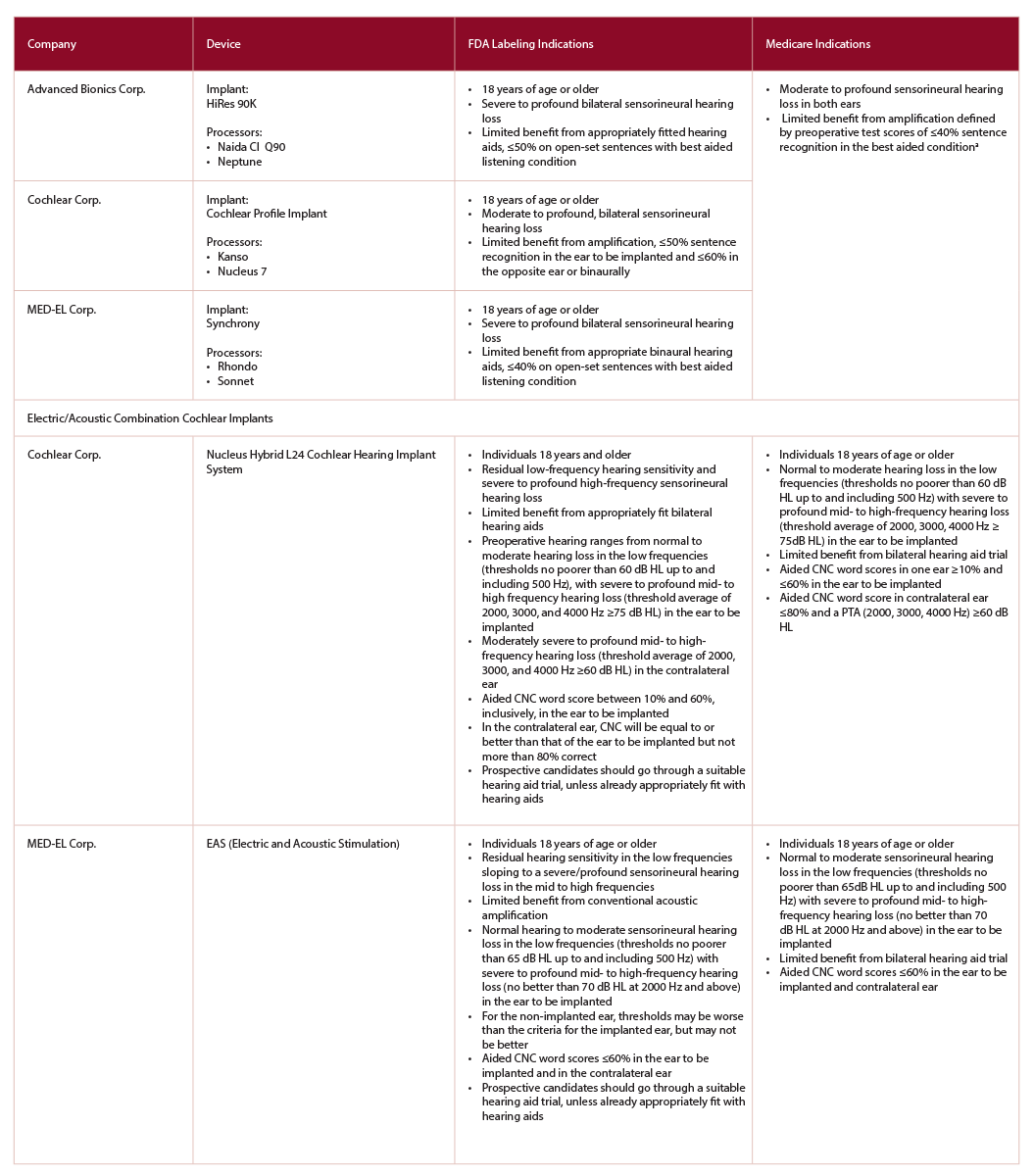
Table 1: Comparison of Cochlear Implant Candidacy between FDA-Approved Devices and Medicare Adult Criteria

November 9, 2017

CMS, Centers for Medicare & Medicaid Services; CNC, consonant-vowel nucleus-consonant; FDA, Food and Drug Administration a Medicare is considering expanding criteria to include those individuals with more residual hearing—≤40% sentence recognition in the ear to be implanted and ≤60% in the opposite ear.

CMS, Centers for Medicare & Medicaid Services;
CNC, consonant-vowel nucleus-consonant;
FDA, Food and Drug Administration
a Medicare is considering expanding criteria to include those individuals with more residual hearing—≤40% sentence recognition in the ear to be implanted and ≤60% in the opposite ear.

ENTtoday - https://www.enttoday.org/article/cochlear-implants-changing-indications-new-technology/ent_1117_pg8c/

CMS, Centers for Medicare & Medicaid Services; CNC, consonant-vowel nucleus-consonant; FDA, Food and Drug Administration a Medicare is considering expanding criteria to include those individuals with more residual hearing—≤40% sentence recognition in the ear to be implanted and ≤60% in the opposite ear.